
DIY Citronella & Lavender Botanical Body Spray
Note: I am not a medical professional. This recipe is for educational purposes only.
There's something about summer that calls for a spray bottle. Whether you're heading out to the garden, packing for a camping trip, or just trying to feel a little fresher in the heat, a good botanical body spray is one of those simple pleasures that earns its place in your routine.
This one has been in my personal rotation for years. I've tweaked it a lot over time, and this is the version I keep coming back to — a blend of citronella, lavender, cedarwood, and rosemary that smells like a summer evening somewhere with tall trees and good air. Earthy, floral, a little resinous. The kind of scent that feels intentional without being loud.
Why These Four Oils
These aren't random — each one brings something to the blend.
Citronella is the backbone. It's sharp and brightand unmistakably summery, and it's been used in botanical preparations for centuries. It grounds the whole spray with that crisp, grassy top note.
Lavender softens everything. Left on its own, citronella can veer a little industrial. Lavender brings it back into floral, skin-friendly territory and adds its own gentle calming properties. I use it in a lot of my formulations for exactly this reason — it plays well with almost everything.
Cedarwood adds depth and a dry, woody warmth that keeps the spray from smelling like a candle. It also has great staying power on skin compared to the lighter oils.
Rosemary is the sharpening note — herbal and a little medicinal, in the best way. It keeps the blend from going too sweet and adds a clean, energizing quality.
Together they're something genuinely lovely. People at the farmer's market stop and ask what I'm wearing. (Answer: this spray.)
Why Witch Hazel?
The original version of this recipe used just distilled water. It worked, but it had one honest flaw: essential oils and water don't mix. They float on top, the spray is inconsistent, and you're not really getting the blend you intended with every pump.
Witch hazel solves this. It acts as a natural dispersant, helping the oils integrate with the water so each spray delivers the full blend evenly. It's also a traditional herbal ingredient in its own right — mildly astringent, gently soothing, and a light natural preservative that extends the life of your spray. If you've read much about herbal skincare, witch hazel is probably already in your cabinet.
Use the alcohol-based, unscented kind for this recipe. That's the version that does the dispersing work effectively.
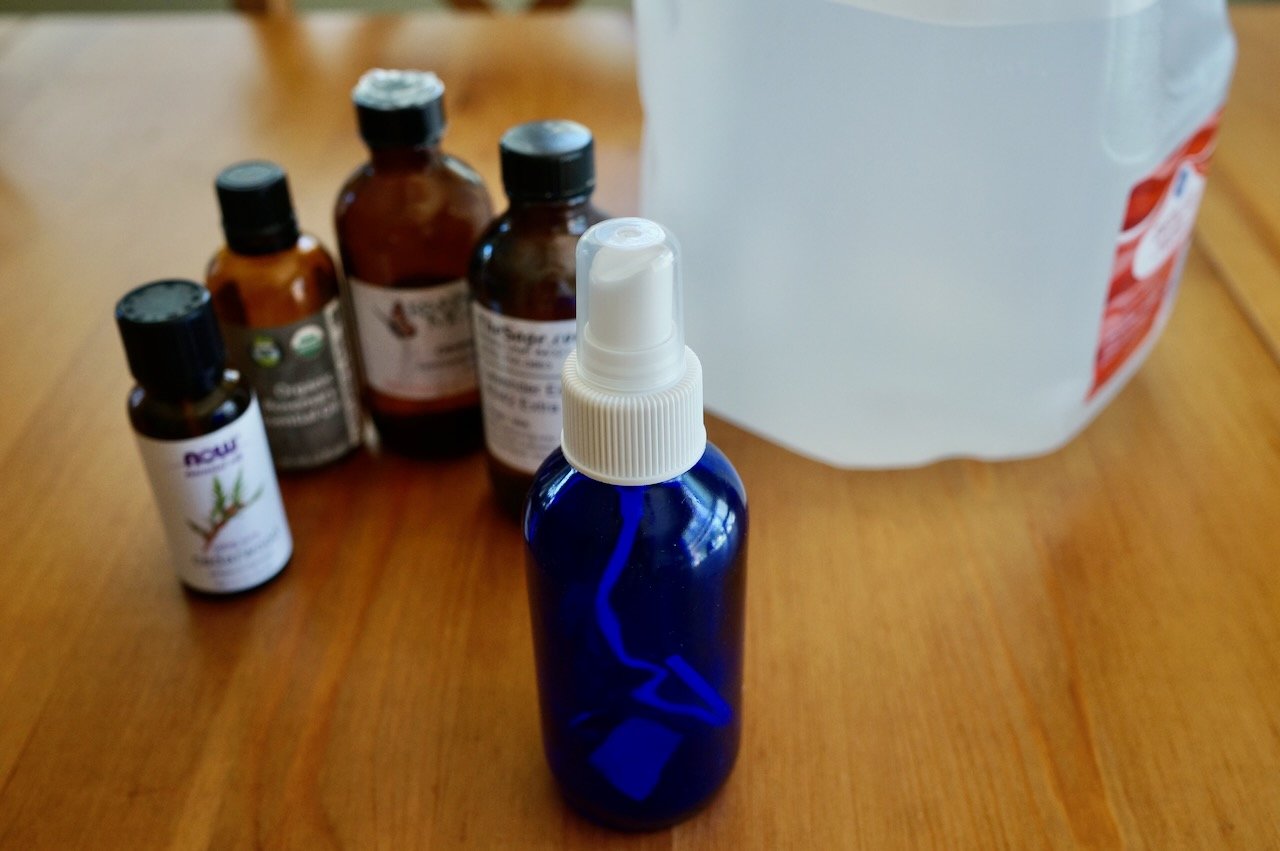
What You'll Need
- 4 oz dark-colored glass spray bottle
- 2 oz distilled water
- 1.5 oz witch hazel (unscented, alcohol-based)
- 50 drops citronella essential oil
- 30 drops lavender essential oil
- 20 drops cedarwood essential oil
- 15 drops rosemary essential oil
Why distilled water? Tap water contains minerals and microbes that can affect both the scent and the shelf life of your spray. Distilled keeps things clean and stable.
Why a dark bottle? Essential oils degrade in light. Amber or cobalt glass protects your oils and keeps the spray fresher longer.
Method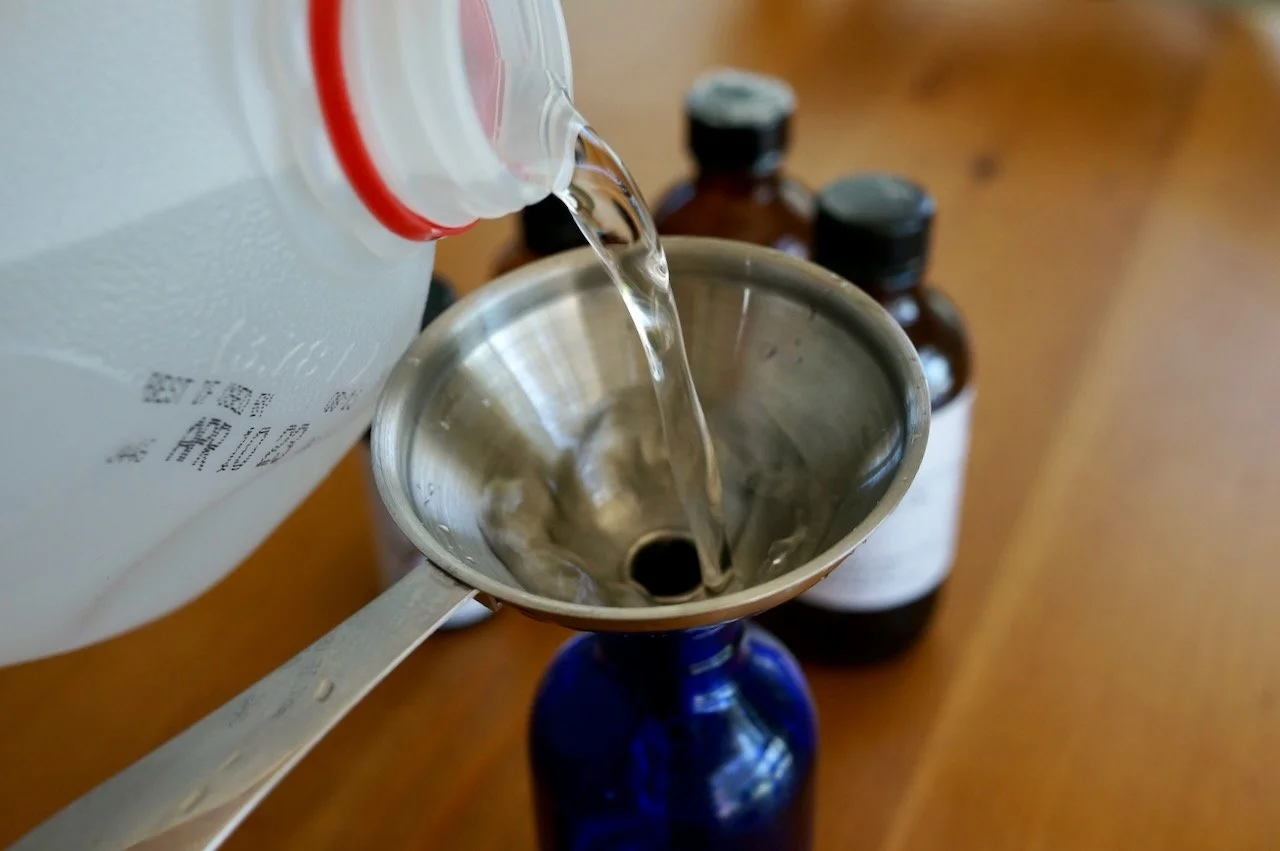
A quick safety note before you start: wear nitrile gloves and work in a well-ventilated space. Essential oils are highly concentrated and can irritate skin if handled undiluted.
- Start with a clean spray bottle.
- Add all your essential oils first — this makes it easier to control the fill level when you add your liquids.
- Pour in the witch hazel.
- Top with distilled water until the bottle is nearly full.
- Cap and shake well to combine.
- Label with the name and date.
- Store in a cool, dark place when not in use.
Give it a good shake before each use — the oils will still want to separate a little over time, and a quick shake brings everything back together. A few seconds is all it takes.
A Few Notes
Shelf life: With witch hazel as a preservative, this spray should stay fresh for 2–3 months stored properly. If the scent starts smelling off or the oils look cloudy in an unusual way, make a fresh batch.
Skin sensitivity: Do a patch test before using liberally, especially if you have sensitive skin. Essential oils are potent, and everyone's skin responds differently. Avoid use near eyes.
Tweaking the formula: I've found this blend works really well in our dry desert climate here in Utah, where the air itself isn't competing with much. If you're in a more humid region, you might want to bump the citronella or swap the lavender for something sharper like lemongrass (also a lovely pairing with citronella). Play with it — that's half the fun.
If you make this, I'd genuinely love to hear how it goes. Did you change anything? Did you love the scent? Drop a comment below.
And if you've been asking me at the farmer's market whether I sell this — thank you, truly, that means a lot. I'm working on a retail version for next summer. Stay on the mailing list and you'll be the first to know.
Explore more on the blog:
0 comments