
Of all the flowers in the world I think the rose might be the most identifiable to everyone. From the scent, to the thorns, to the delicate petals. Roses are one of the oldest recorded natural perfumes used by the Egyptians, Greeks, Persians, Romans. The scent evokes a feeling of calm and relaxation as well as sensuality.
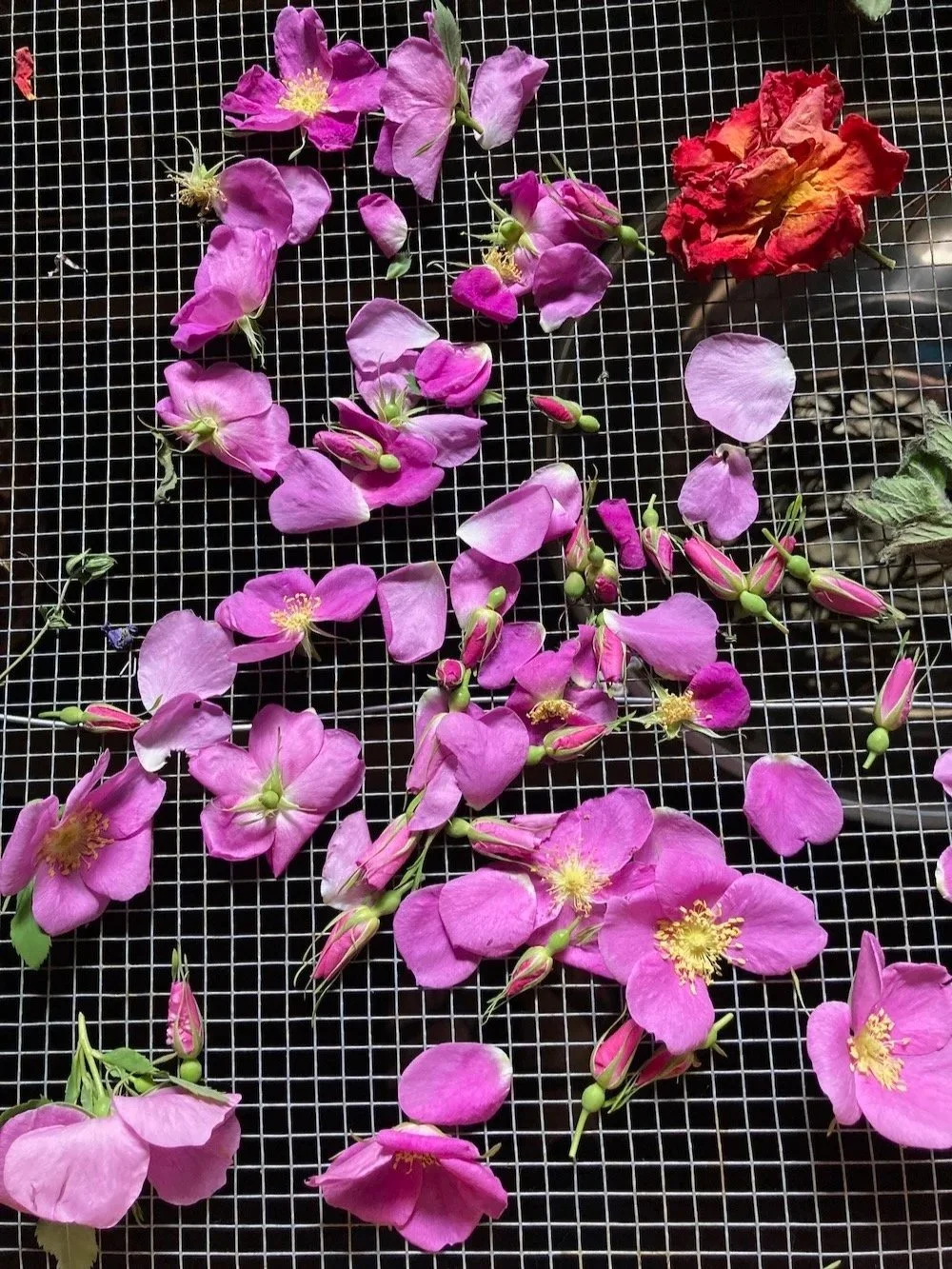
Rose bushes are wild, really wild. If you don’t prune them properly they will go wherever they like. One of my favorite wild roses Rosa rugosa has just 5 gorgeous pink petals. The flowers in bloom are only about the size of a 50 cent piece. The buds if picked and dried, will dry down to the most stunning deep magenta.
Every year I harvest one half pint jar full of them to make my Rose & Geranium soap. Opening the jar to take out the tiny buds to put on top of my soaps is a scent experience in itself. Sweet, floral hints of earthiness waft up at me tickling my nose each time. The same goes for my Rose & Chocolate soap on which I put rose buds and petals grown in our Nettlesome herb garden.
Most of our experience with roses is for their scent (ask any naural prefumer about Rosa x damascena), but you can also make a tea from the fresh hips to get a good dose of vitamin c. The oil from the hips is really lovely for dryer and mature skin as well.
Rose hydrosol is used as an astringent for facial cleansing as well as food and tea flavorings.
While doing my research for this post I discovered that rose water has been traditionally used as an eye wash for infections or inflammation and to stem the blood flow of bleeding noses and gums. It was even used historically for tuberculosis patients. Matthew Wood has an excellent mini monograph about roses in his Earthwise Herbal Volume 1.
One other uses of roses noted Micheal Moore in Medicinal Plants of the Intermountain West, is if you happen to have a bout of diarrhea, a tea of rose buds drunk frequently throughout the day can help slow it down.
Properties of Roses
Edible Parts: petals, flower buds, hips, bark, stems, roots
Energetics: drying and cooling
Family: Rosaceae
Identification: Wild roses (Rosa woodsii or rugosa) for example have small serrated oval leaves that are dark green, the stems are thorny and the flower will have 5 petals with yellow stamens.
Habitat: Wild Rose can be found in wooded areas near water ways or with shallow water table
Medicinal properties: Astringent, aromatic, hips are high in flavonoids
0 comments