
Note: the information in this post is for educational purposes only. I am not a medical professional. If you have an issue please consult your doctor or naturopath or herbalist.
The skin is the largest organ of your body. It is your first defense against the outside world and provides protection that your body cannot live without. Your hair and nails are also part of this system called the integumentary system. Your skin is made of keratinized epithelial cells that help to make the body waterproof the outside and from loosing water from the inside. This keratinized layer is called the epidermis, which is made of dead and dried cells from the epithelial layer below it.
Here are some of the incredible main functions your skin performs:
-
Protects the body from UV radiation
-
Makes new cells to repair minor injuries
-
Protects your body from cold, heat, dehydrations
-
Protects the organs and inner delicate tissues
-
Is a touch receptor
-
Help remove waste from the body through sweat
-
Indicates inner body imbalances via sensitivity, rashes, dryness or wetness and various inflammatory conditions
Writing a definitive list of plants that help support healthy skin feels like an impossible task. There are so many incredible plants out there with antioxidant, anti-inflammatory, emollient, soothing, collagen building, wrinkle reducing properties. As an herbalist choosing just 10 of the BEST feels like I’m excluding people from the party. It’s also difficult to make a list because :
skin issues are an outward manifestation of an inner imbalance in the body.
If you have cronic skin conditions you may want to consider asking your health care provider to check for liver and/or kidney imbalances.
This list of herbs should be considered in conjunction with_
-
a healthy diet
-
staying hydrated ( that includes having a good electrolyte balance and staying away from alcohol)
-
getting enough sleep
-
avoiding air pollution
-
getting enough infrared light from early morning sun, or red lights, or like ancestors did by sitting around a fire, while also avoiding getting sunburned
What this list is really about is 10 beneficial beginner herbs for natural skin care that includes first aid herbs for acute situations. These are plants that are tried and tested to be safe and beneficial for use on your skin.
Let’s start by defining the terms “skincare” vs “skin care”. It’s common to see both words used interchangeably, however it seems after some research that the two word version “skin care” is a verb meaning the actions you take to take care of your skin. While the one word version is a noun meaning a product used on your skin.
In this post I’ll be talking about 10 skincare herbs and how you use them in your skin care routine.
Now that we have that all straightened out, let’s get to the fun part, talking about plants!
At Nettlesome Pantry I am all about skin-friendly plants. I have soaps that are infused with 8 of the herbs on the list. As an herbalist and gardener, I’ve grown all of the plants on this list and have used them to make soap, foot soaks, salves, tinctures, teas and healing lotions and balms. I’ve had experience with these plants from seed to final skincare product. These ten plants are very beginner friendly and pack a big punch if used for the correct need. Just like in a skin care routine with cleansing, serums, moisturizers, each plant has a job that it likes to do best, so learning about what that job is, is very important.
10 Beneficial Herbs for Natural Skin Care
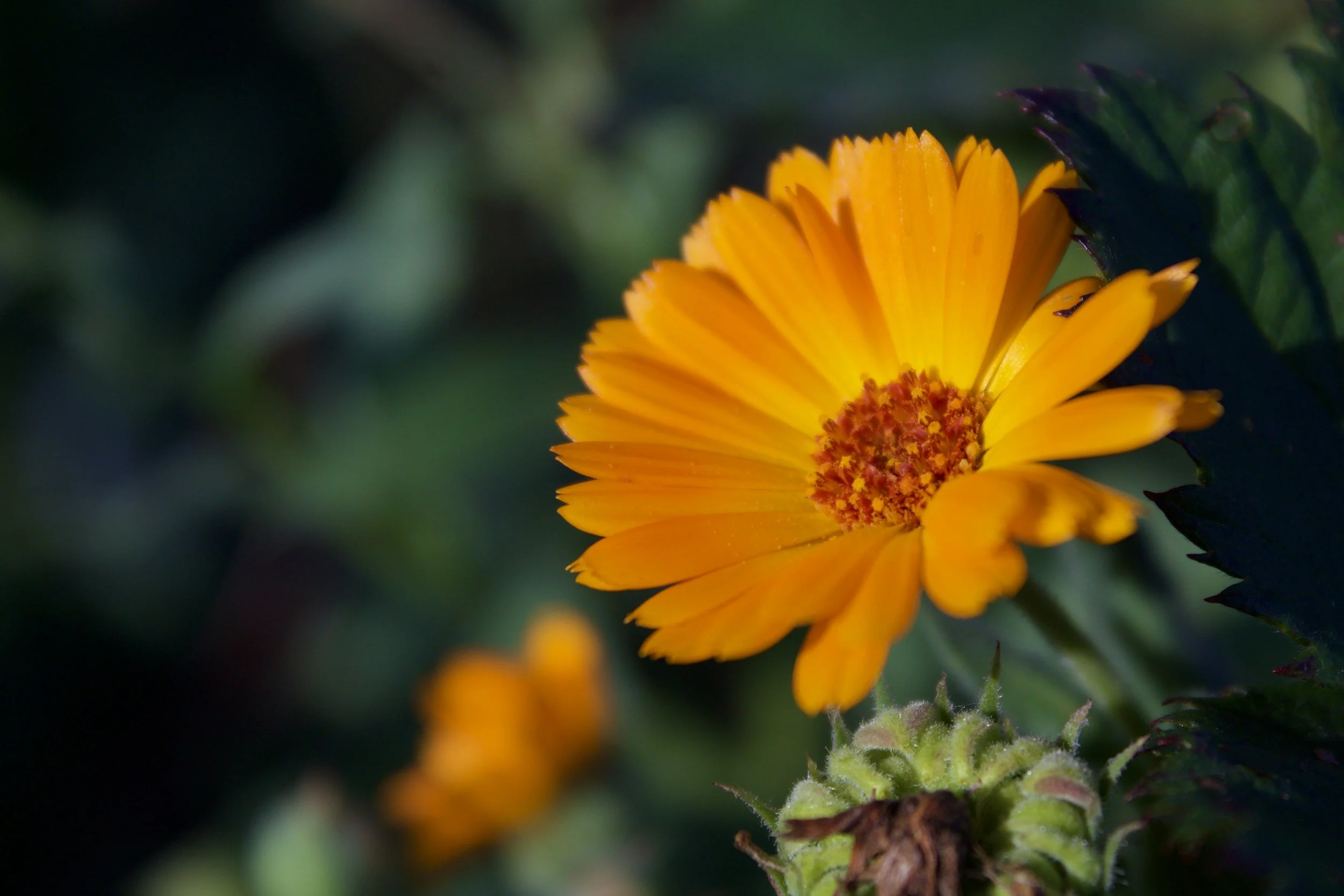
Calendula (Calendula officinalis)
One of the most prized medicinal herbs for herbalist, these bright happy yellow to orange flowers are in the asteraceae family along with flowers like_ asters, arnica, sage brush, echinacea, sunflowers and so many more.
Calendula is native to Europe but has become naturalized in North America.
Calendula is a resinous flower. That sticky resin holds the constituents that are so good for skin ailments, from scrapes, cuts, rashes to dry skin conditions.
A simple calendula salve made with oil infused with calendula flowers and a little beeswax is an excellent item to have on hand.
In my sunny meadow soap I include a water infusing on calendula and chamomile to aid dry sensitive skin.
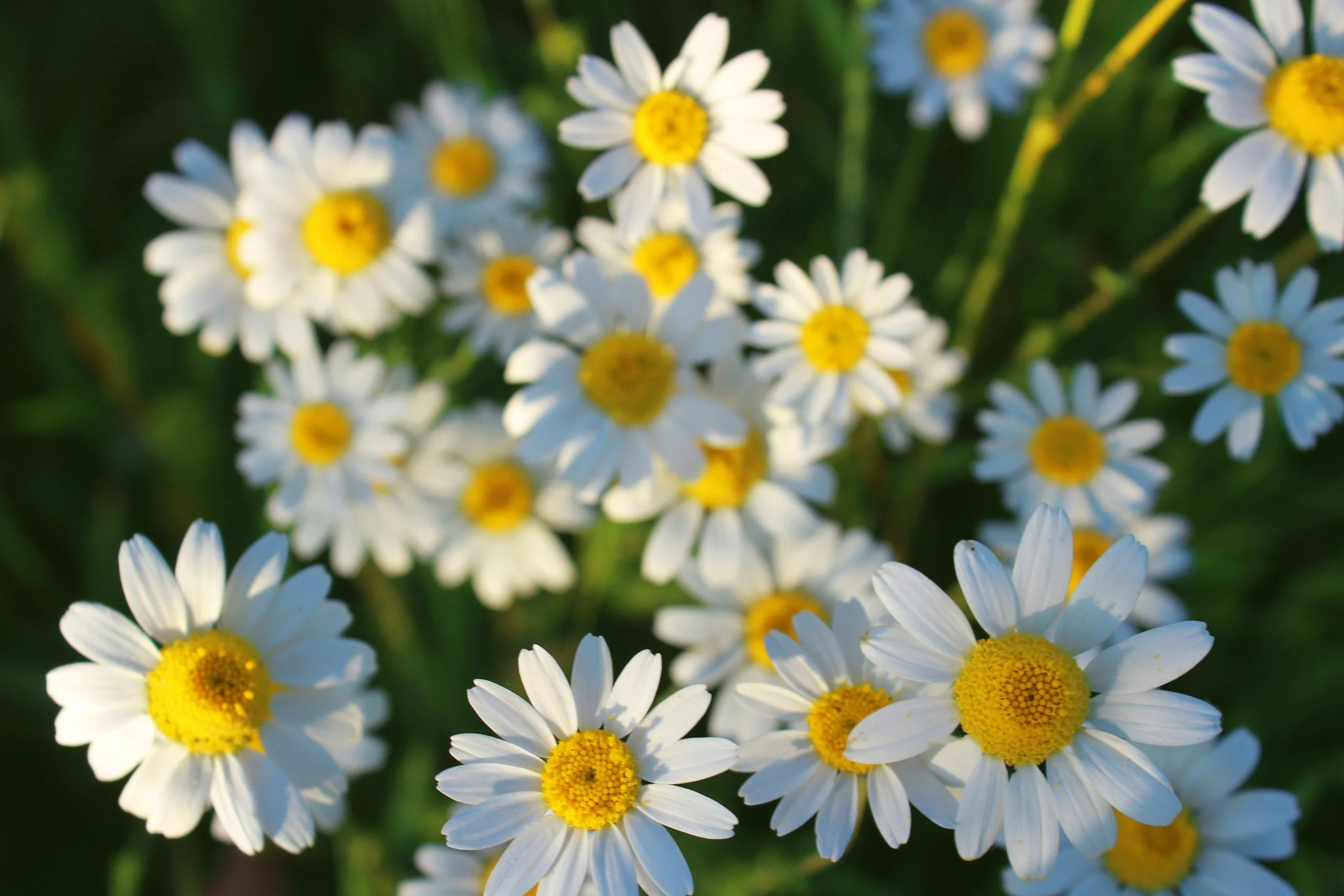
Chamomile (Matricaria recutita)
Chamomile is synonymous with relaxation. Drunk as a tea in the evenings to aid in sleep or as a carminative to help calm an achy stomach. Chamomile is also a wonderful for topical use for sore muscles or inflammatory skin conditions.
Chamomile is in the asteracea family. It looks much like feverfew with small white petals around a cone center. Another incredible skin loving plant that hails from the Mediterranean, chamomile has been used since antiquity for digestive issues, issues of the nervous system, musculoskeletal pain and emotional/mental upset.
Chamomile is an anti-spasmodic, carminative, nervine sedative.
Topically it can be used to soothe inflamed tissues from burns, scrapes, eczema, psoriasis, rashes and other irritants.
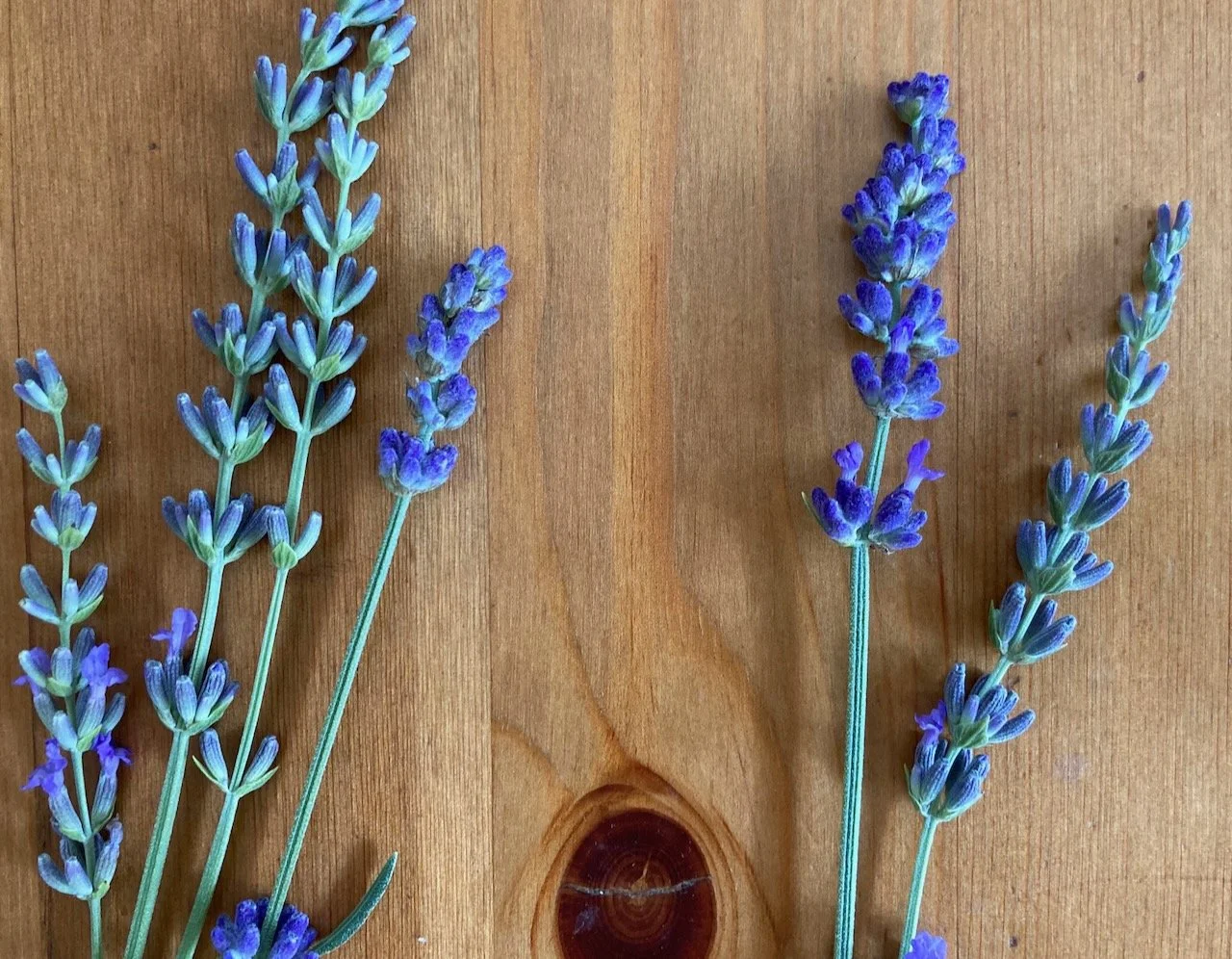
Lavender (Lavandula officinalis, L. angustafolia)
Lavender is member of the mint family and came originally from the drier parts of the Mediterranean. Today it’s grown with the most success in areas that are rocky and higher in ph levels.
The name lavender comes from lavare, meaning to bathe in latin. Even the Romans used lavender in their daily bathing routines. Lavender has a calming soothing quality that is prized the world over. Lavender can be distilled in different ways to yield varying levels of potency and fragrance. It can be steam distilled for the essential oils, hydro distilled to make hydrosol, and distilled in alcohol. This makes it an excellent addition to skincare products.
Lavender is anti-fungal, analgesic and aromatic and relaxing, making it an excellent addition to soaps, salves, lotions, topical oils, and aromatherapy defusers.
Tea Tree (Melaleuca alternifolia)
Tea tree oil comes from the steam distilled leaves of tea tree plant, which is native to Australia. It’s rich in terpinene and cineole and has quite a clean medicinal smell, much like eucalyptus. When the tree blooms in October and November it has loose terminal flowers that end in spikes, giving the tree a fluffy look.
Melaleuca has been used for ages by the native people of Australia who used it to help with skin ailments. We now know from a few in vitro studies that tea tree does have anti-microbial properties. Commercially tea tree oil has become very popular in cleaning supplies, shampoos, tooth paste and skin care products.
Used topically it can aid in soothing problem skin, issue with dandruff and fungal skin issues.
Tea tree oil is very potent and should not be taken internally and when used on the skin it should always be diluted in a carrier oil.
If you’d like to smell tea tree oil in a soap, you might be interested in “The Char-Mer”.
Plantain (Plantago major)
Plantain is one of my absolute favorite skin loving plants. It’s found all over North America and Europe. It thrives in disturbed garden soil and anywhere humans walk. Plantain can be identified by it’s oval shaped leaves with parallel leaf veins and cylindrical flower spikes. It is part of the Plantaginacea family.
Plantain is one power house of a plant ally. It can be used both internally and topically. When made into a tea, it can be used internally to soothe an irritated and inflamed gut lining. Topically it can be used as poultice, salve, an oil, in soaps and lotions. It can be used to soothe the sting of insect bites. An application of a salve or oil to minor cuts, burns, scraps or blisters can aid your skin in repairing the damage.
Plantain while being mucilaginous also has astringent properties and is widely used in herbal medicine as a drawing agent to help clean wounds, pull out splinters and draw out infections.
Plantain is a skin ally to both dry skin conditions and damp ones. Whether you need to cool and moisten as hot dry skin condition like eczema or to dry up an infected wound like an abscess, plantain is incredibly useful.
I highly recommend learning more about plantain in this post.
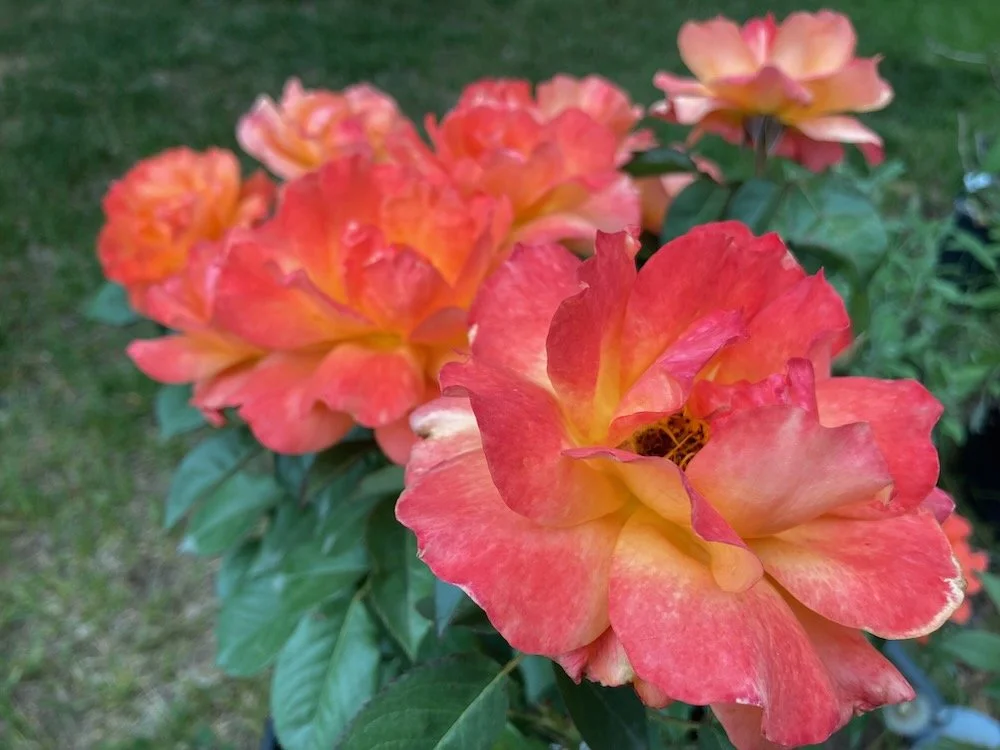
Rose (Rosa rugosa. Spp R. Damascus)
Both rose petals and rose hips have been highly prized in skin care products for a millennia. Soothing and strengthening to dry and aging skin. Rose hydrosol is a gentile astringent post cleansing. While rose hips are rich in anti-oxidants and the oil extracted from the seed is wonderful as a moisturizer on the face.
Roses are also highly prized for their smell. The Damascus rose is the main rose used in perfumery as it has the highest essential oil content and the most iconic rose scent.
Oatmeal (Avena sativa)
Oatmeal is so much more than a breakfast food. It is very mucilaginous and the thing that dry, itchy, irritated skin needs most is moisture.
An oatmeal bath this the most common way to use oats for skin care. Simply cook oats in extra water for 15 minutes. The strain the oats into a muslin bag reserving the water. Fill up the bathtub with warm water and pour the reserved oat water into the bath and add the muslin bag. Soak and enjoy.
Oats also make a lovely addition to soap and skincare products as scrubbing agent for exfoliation.
Herbalist prize milky oat tops for their internal benefits as nourishing tonic to the nervous system. If you have skin issues that are due to stress and tension milky oats can be an added tool in your skin care box.
Aloe Vera (Aloe barbadensis)
If you’ve ever had a sunburn and used aloe to cool the burning feeling and soothe the itchy, prickly feeling, you’ll know the power of aloe. The rich gel inside the leaves contains lots of anthroquinones which promote tissue repair.
This one of those house plants everyone should have around. Use it on any kitchen burns, sunburns, rashes, eczema, acne. Anytime the skin is damaged and inflamed. And crazily enough it contains a natural sunscreen that blocks 20-30% of ultra-violet light.
It’s easiest to use aloe straight from the plant, but using skincare products that include aloe if you have dry or damaged skin conditions can be very soothing.
Yarrow (Achillea millefolium)
Yarrow grows pretty much all over the world. Here is the high deserts of Utah you’ll find it everywhere, from rocky slopes to deep forested areas, grassy backyards, high mountain prairies and meadows to cracks in the sidewalk.
It can be easily identified by it’s long lacy alternate leaves and large umbell shaped flowers. The flowers can range from pure white to pink, yellow or orange. The white ones have the most potent constituents fellow herbalist have told me.
Achillea, is not a herb that you will find often in mass produced skincare products, however it is one of the quintessential herbs in an herbalist’s first aid kit. It’s amphoteric (meaning it moves in the direction it’s needed). Yarrow is well know for stemming the flow of blood in a cut that just won’t stop bleeding. But if you are a woman who is having amenorrhea, yarrow can help stimulate menses.
It’s anti-sceptic, anti-inflammatory and astringent. If you taste a yarrow leaf it very quickly makes your mouth pucker from both bitterness and astringency.
Yarrow can be used safely internally and topically. It can be applied as salve or poultice to wounds and bruises, as a tincture, ligament or wash to help reduce varicose veins.
As an addendum to the list I would like to add in green tea (Camellia sinesis). Green tea is high in antioxidants and is very beneficial when taken as tea for skin health from the inside out. It can also be used as a wash after sun exposure to lessen any damage from UV.
To sum it all up_
Having healthy skin is a combination of how you take care of your body from inside and from the outside. These skin friendly herbs can used when when acute situations arise as well as aid your body in returning your skin to a healthy balance.
If you’d like to read more about my seasonal skincare transition tips explore the links below_
Reference Sources_
-
Various Authors. Anatomy & Physiology of Made Easy. NEDU Publishing, 2021
-
Bayton and Maughan. Plant Families_ A Guide for Gardeners and Botanists. University of Chicago Press, 2017.
-
Easley and Horne. The Modern Herbal Dispensatory_ A Medicine Making Guide. North Atlantic Books, 2016
-
Wood, Matthew. The Earthwise Herbal Volume 1_ A Complete Guide to Old World Medicinal Plants. North Atlantic Books, 2008.
-
De La Foret and Han. Wild Remedies_ How to Forage Healing Foods and Craft Your own Herbal Medicine. Hay House, 2020.
0 comments